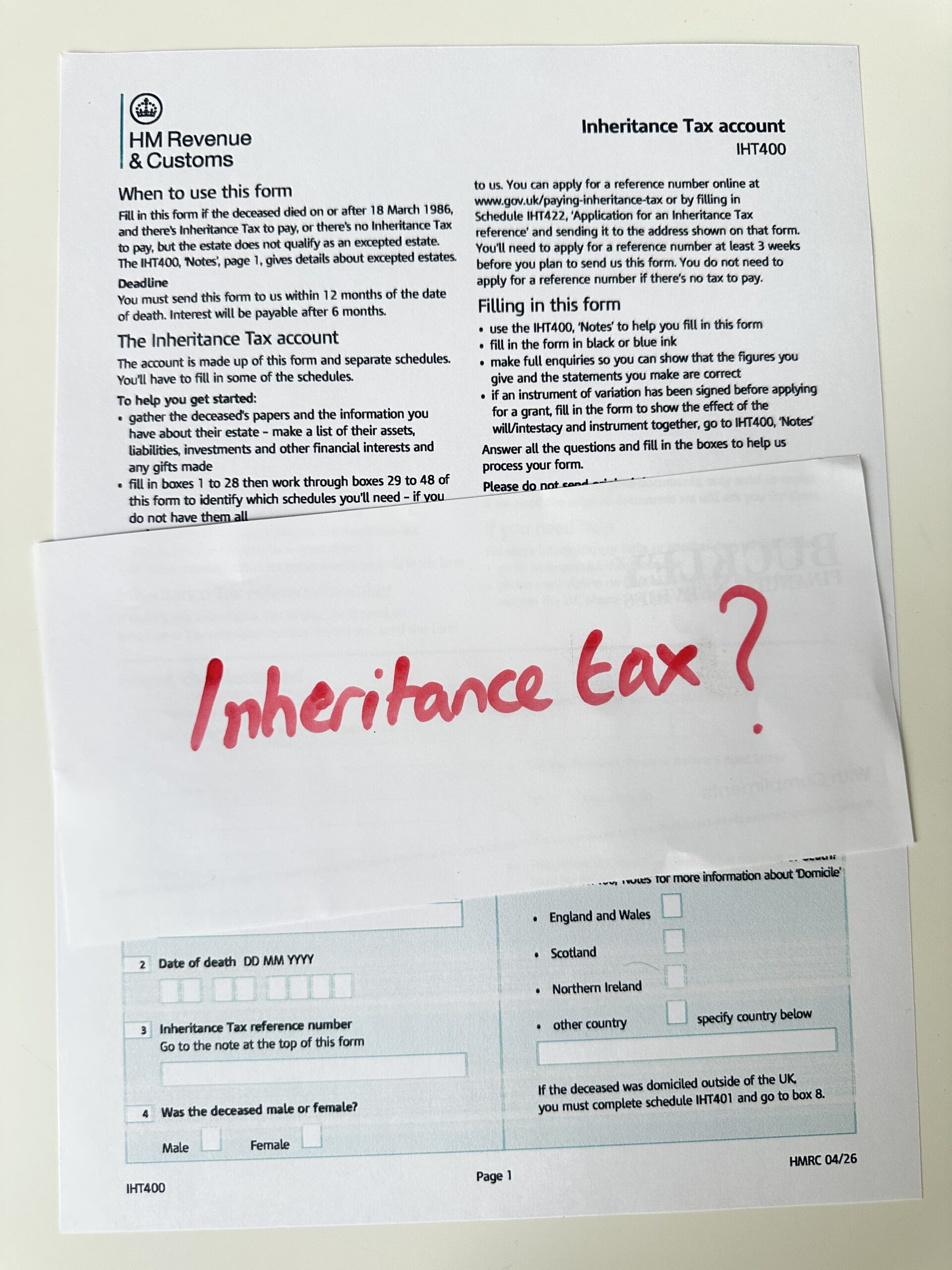
Seven Inheritance Tax Mistakes That Cost UK Families Thousands

Inheritance Tax remains one of the most widely discussed taxes in the UK and one of
the least understood.

For successful business owners and affluent families across Nottinghamshire, the issue
is not whether tax can be reduced legally. In many cases it can.

The real problem is that planning often begins too late.

Below are seven common mistakes that regularly result in families paying more tax than
necessary.

1. Assuming Inheritance Tax Is Only a Problem for the Very Wealthy

Many people underestimate the value of their estate.

Property, pensions, investments, business interests and life assurance policies can
quickly accumulate into a substantial estate.

What may not feel like significant wealth today can easily create a future tax liability.

2. Leaving Planning Until Later

Inheritance Tax planning is often viewed as something to consider in later life.

However, many effective strategies become more valuable the earlier they are
implemented.

Starting discussions sooner provides greater flexibility and more options.

3. Failing to Make Use of Available Gifting Opportunities

Many individuals wish to help children and grandchildren during their lifetime but never
fully explore available gifting allowances and exemptions.

Structured gifting can provide benefits for both generations when undertaken
appropriately.

4. Ignoring the Impact of Business Succession

Business owners frequently focus on the commercial future of their company while
overlooking the impact on family wealth.

Without proper planning, business interests can create complexity and uncertainty for
future generations.

A succession strategy should form part of every broader estate plan.

5. Not Reviewing Existing Plans

Tax legislation evolves.

Family circumstances change.

Businesses grow.

What worked ten years ago may no longer be appropriate today.

Regular reviews help ensure that planning remains aligned with current objectives.

6. Focusing Solely on Tax

Inheritance Tax planning is about more than reducing a tax bill.

The most successful strategies consider:
* Family values
* Wealth preservation
* Asset protection
* Long-term objectives
* Future generations

The goal is often broader than taxation alone.

7. Avoiding Difficult Conversations

Perhaps the most common mistake is simply avoiding the discussion altogether.

Families frequently spend decades accumulating wealth but never discuss how that
wealth should be managed in the future.

Open conversations often lead to better decisions and clearer outcomes.

Planning for the Future

Inheritance Tax planning is not simply about numbers.

It is about ensuring that the wealth you have worked hard to create benefits the people
and causes that matter most to you.

For many business owners, proactive planning today can help preserve family wealth for generations to come.

Get in touch to discuss your plans with Paul Buckley:  Info@buckleyfinancialservices.co.uk

What Happens to Your Pension When You Sell Your Business?

For many successful business owners, the decision to sell a business is one of the most
significant financial events of their lifetime. Yet while considerable attention is often
given to maximising the sale value, surprisingly little thought is given to what happens
next.

The reality is that selling a business doesn't automatically create financial security. It
simply converts one asset into another.

For business owners across Nottinghamshire approaching retirement, understanding
how a business sale interacts with pension planning could make the difference between
preserving wealth for generations and paying unnecessary tax.

A New Financial Reality

Many business owners have spent decades reinvesting profits back into their
companies. The business itself becomes the pension.

Unlike employed professionals who steadily contribute into workplace pensions,
entrepreneurs often find themselves asset-rich but pension-poor.

Following a business sale, the challenge becomes transforming capital into sustainable
retirement income.

This requires careful consideration of:
* Pension contribution opportunities before sale
* Capital Gains Tax planning
* Income requirements in retirement
* Inheritance Tax exposure

* Wealth transfer strategies

The Pension Opportunity Many Owners Miss

One of the most common mistakes we see is waiting until after completion to consider
pension funding.

Depending on circumstances, there can be significant opportunities to increase pension
contributions before a transaction takes place.

For business owners who have prioritised company growth over pension savings, these
final years before exit can be crucial.

Proper planning may allow substantial pension funding while simultaneously improving
tax efficiency.

Retirement Is No Longer About Stopping Work

Today’s business owners rarely retire in the traditional sense.

Many continue with consultancy work, mentoring, non-executive directorships or
investment activities.

The question is no longer:
“When will I retire?

Instead, it is:
“What do I want the next chapter of my life to look like?”

A pension strategy should support that vision.

Protecting Wealth Beyond Retirement

Once sale proceeds have been received, attention should shift towards preserving
wealth.

This may involve:
* Pension planning
* Tax-efficient investments
* Family gifting strategies
* Trust planning
* Estate planning

For many Nottinghamshire business owners, the focus moves from wealth creation to
wealth preservation.

Planning Before the Deal Completes

The most effective planning almost always happens before contracts are signed.

Once a sale has completed, many opportunities disappear.

For business owners considering a sale within the next three to five years, now is the
ideal time to review pension arrangements and ensure they form part of a wider
financial strategy.

The value of your business may represent decades of hard work. Making the right
decisions before and after a sale can help ensure that wealth benefits not only your
retirement, but future generations as well.

Take the next step and book an appointment by sending an email to info@buckleyfinancialservices.co.uk

Financial Planning for Business Owners: The Things Nobody Talks About

Successful business owners spend years solving problems.
They manage staff, navigate economic uncertainty, win clients and build value. Yet despite their commercial success, many overlook the very issues that ultimately determine whether their wealth is preserved.
The uncomfortable truth is that financial success and financial planning are not the same thing.
Across Nottingham and Nottinghamshire, many multi-million-pound business owners have accumulated significant wealth but have never stepped back to ask one simple question:
“What happens next?”

The Wealth Concentration Problem
For many entrepreneurs, the majority of their wealth exists in a single asset: their business.
While this can create exceptional returns, it also creates risk.
Economic conditions change.
Industries evolve.
Health circumstances shift unexpectedly.
Diversification is often discussed in investment circles, but business owners frequently overlook the concentration risk sitting at the heart of their own balance sheet.

The Emotional Challenge of Letting Go
Much has been written about business exits from a financial perspective.
Far less is said about the emotional transition.
Many owners discover that selling a business solves financial challenges but creates new personal ones.
Identity, purpose and routine can all be affected.
The most successful exits involve planning for life after the transaction—not simply the transaction itself.

Tax Is Not the Biggest Risk
Business owners often focus heavily on tax efficiency.
While important, tax is rarely the greatest threat to long-term financial security.
Poor succession planning.
Lack of estate planning.
Inadequate retirement income structures.
Failure to engage the next generation.
These issues often have a far greater impact on family wealth.

Family Conversations Matter
One of the most overlooked areas of financial planning is communication.
Parents frequently spend years building wealth for future generations without discussing expectations, responsibilities or values.
The result can be confusion and conflict.
Effective planning isn’t just about assets. It’s about preparing families.

The Shift From Builder to Steward
Eventually every business owner reaches a point where the focus changes.
The challenge is no longer building wealth.
The challenge becomes protecting it.
That shift requires a different mindset.
It requires structured planning, clear objectives and an understanding that preserving wealth can be every bit as important as creating it.

For Nottinghamshire business owners approaching retirement, this transition may be the most important financial decision they ever make.

Contact Paul Buckley on 0115 665 0319 or info@buckleyfinancialservices.co.uk